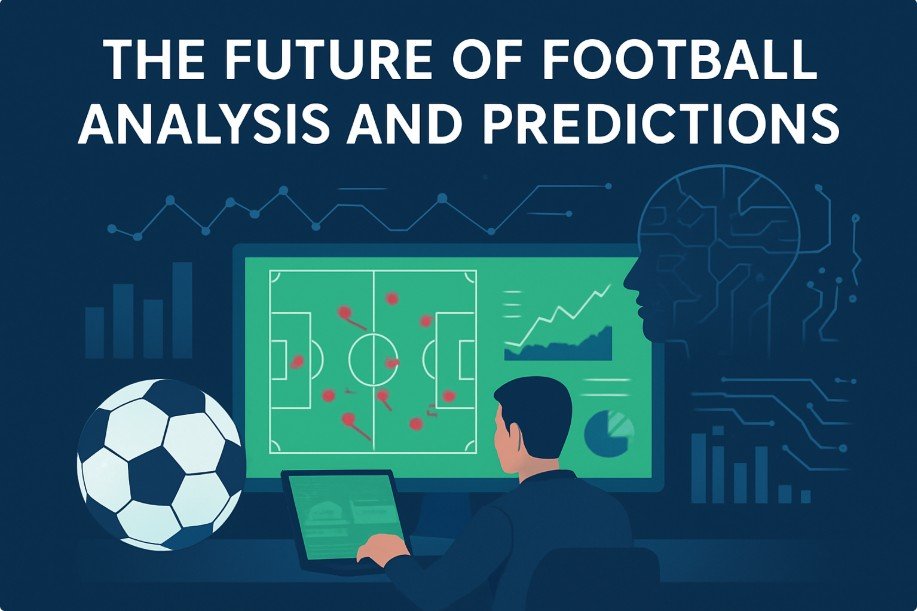
Football has always been a game of opinions. Fans debate lineups, managers argue tactics, and pundits analyze performances from every possible angle. But over the past decade, football analysis has changed dramatically. What used to rely mostly on eye tests and experience is now supported by data, technology, and smarter methods of understanding the game.
As football continues to evolve, so does the way matches are analyzed and predicted. This article looks at where football analysis is heading, what tools are shaping the future, and how predictions are becoming more informed without losing the human element that makes football special.
How Football Analysis Has Changed
From Simple Stats to Deeper Insights
In the past, football analysis focused on basic numbers: goals scored, possession percentage, shots on target, and league position. These stats still matter, but they only tell part of the story.
Modern analysis digs deeper. It looks at how chances are created, where players position themselves, how teams press, and how patterns develop over a match. Instead of asking who won, analysts now ask why they won.
This shift has helped fans, coaches, and analysts understand football beyond the scoreboard.
The Role of Technology
Technology has been a major driver of this change. Match-tracking systems, video analysis software, and advanced databases allow analysts to review every movement on the pitch.
Clubs use this data internally, but much of it is now available publicly. This has made football analysis more accessible, allowing everyday fans to think more critically about matches.
Data and Analytics in Modern Football
Expected Goals (xG) and Beyond
One of the most well-known modern metrics is Expected Goals (xG). It estimates how likely a shot is to result in a goal based on factors like distance, angle, and pressure.
While xG is useful, it’s just one piece of the puzzle. Analysts now combine multiple metrics, such as:
-
Chances created
-
Defensive actions
-
Passing networks
-
Pressing intensity
Together, these numbers help paint a clearer picture of a team’s true performance.
Why Context Still Matters
Data alone is not enough. Numbers can show trends, but they can’t fully explain context. A red card, injuries, weather conditions, or fixture congestion can all affect a match.
The future of football analysis lies in blending data with context. The best analysts don’t blindly follow statistics, they interpret them.
Artificial Intelligence and Machine Learning
Smarter Pattern Recognition
Artificial Intelligence (AI) and machine learning are becoming more common in football analysis. These systems can process massive amounts of data faster than any human.
They help identify patterns that might otherwise go unnoticed, such as:
-
How certain teams struggle against specific formations
-
How performance changes when key players are missing
-
Long-term trends across leagues and seasons
This doesn’t replace human judgment it supports it.
Limitations of AI Predictions
Despite the excitement around AI, football remains unpredictable. A deflected shot, a referee decision, or a moment of brilliance can change everything.
AI can improve accuracy over time, but it cannot guarantee outcomes. Football’s unpredictability is part of what makes it interesting, and no system can fully remove that uncertainty.
Tactical Analysis Is Becoming More Important
Understanding Systems, Not Just Players
Modern football analysis focuses heavily on tactics. Instead of only analyzing individual players, analysts study systems and structures.
Questions like these matter more than ever:
-
How does a team build from the back?
-
What happens when they lose possession?
-
How do they defend transitions?
Understanding tactics helps explain why some teams perform well even without star players, while others struggle despite strong squads.
Managers and Adaptability
The future favors adaptable teams. Analysts now track how managers adjust tactics during matches and across seasons.
Teams that can switch systems, change pressing styles, or manage game tempo effectively tend to perform more consistently. This tactical flexibility is becoming a key part of modern football analysis.
The Human Side of Football Predictions
Psychology and Motivation
Not everything can be measured with data. Player confidence, team morale, and motivation play a huge role in football.
A team fighting relegation may perform very differently from a mid-table side with little at stake. Derby matches, rivalries, and crowd influence still matter—and they always will.
Good analysis acknowledges these factors instead of ignoring them.
Why Football Will Never Be Fully Predictable
No matter how advanced analysis becomes, football will always surprise us. That’s because it’s played by humans, not machines.
The future of predictions is not about being “perfect.” It’s about being better informed, more balanced, and more realistic about uncertainty.
What the Future Looks Like for Fans and Analysts
More Transparency and Education
As analysis tools become more available, fans are learning to think differently about football. Discussions are becoming more detailed and less emotional—though passion will never disappear.
Educational content that explains analysis in simple terms is growing. This helps bridge the gap between raw data and everyday understanding.
Simpler, Clearer Explanations
One important trend is clarity. The best football analysis in the future won’t be the most complex, it will be the easiest to understand.
Explaining why something happened in plain English is more valuable than showing dozens of confusing charts.
Conclusion.
The future of football analysis and predictions is not about replacing opinions with numbers. It’s about improving how we understand the game.
Data, technology, and AI will continue to grow, but human judgment, context, and experience will remain essential. Football is evolving, and so is the way we analyze it but its unpredictability will always keep it exciting.
In the end, better analysis doesn’t take away from football’s magic. It helps us appreciate it more.